



Property management teams already live in their PMS. Resident records, lease dates, move-ins, move-outs, and unit changes are managed there every day. Smart access should work from that same information, not require teams to repeat the work in another system.
That is the value of a property management system integration. It allows resident and lease data already stored in the PMS to support smart access workflows, helping keep access aligned as residents move in, move out, renew, or transfer units.
For multifamily owners and operators trying to run larger portfolios with leaner teams, reducing those extra steps matters. According to Parks Associates, multifamily companies using smart building solutions report a 20% average increase in operating efficiency and an 18% reduction in operating costs.
The opportunity grows when those technologies connect to the systems property teams already use rather than creating another silo.
With DOOR, the PMS remains the source of truth. Resident and lease information can sync into DOOR OS so access changes happen in the background while property teams continue working where they already spend their time.
What Is a Property Management System Integration?
A property management system integration connects a PMS with another software or technology platform so information can move between the two systems without requiring teams to manually enter the same data multiple times.
In multifamily, the PMS typically serves as the system of record for resident and lease information. It tracks who lives in a unit, when their lease begins and ends, and when they move in, move out, renew, or transfer.
A PMS integration allows that information to support connected property technology, including smart access control.
There are two common types of software integrations:
- One-way integration: Information flows from one system into another, while the originating system remains the source of truth.
- Two-way integration: Both platforms can send information and updates back and forth.
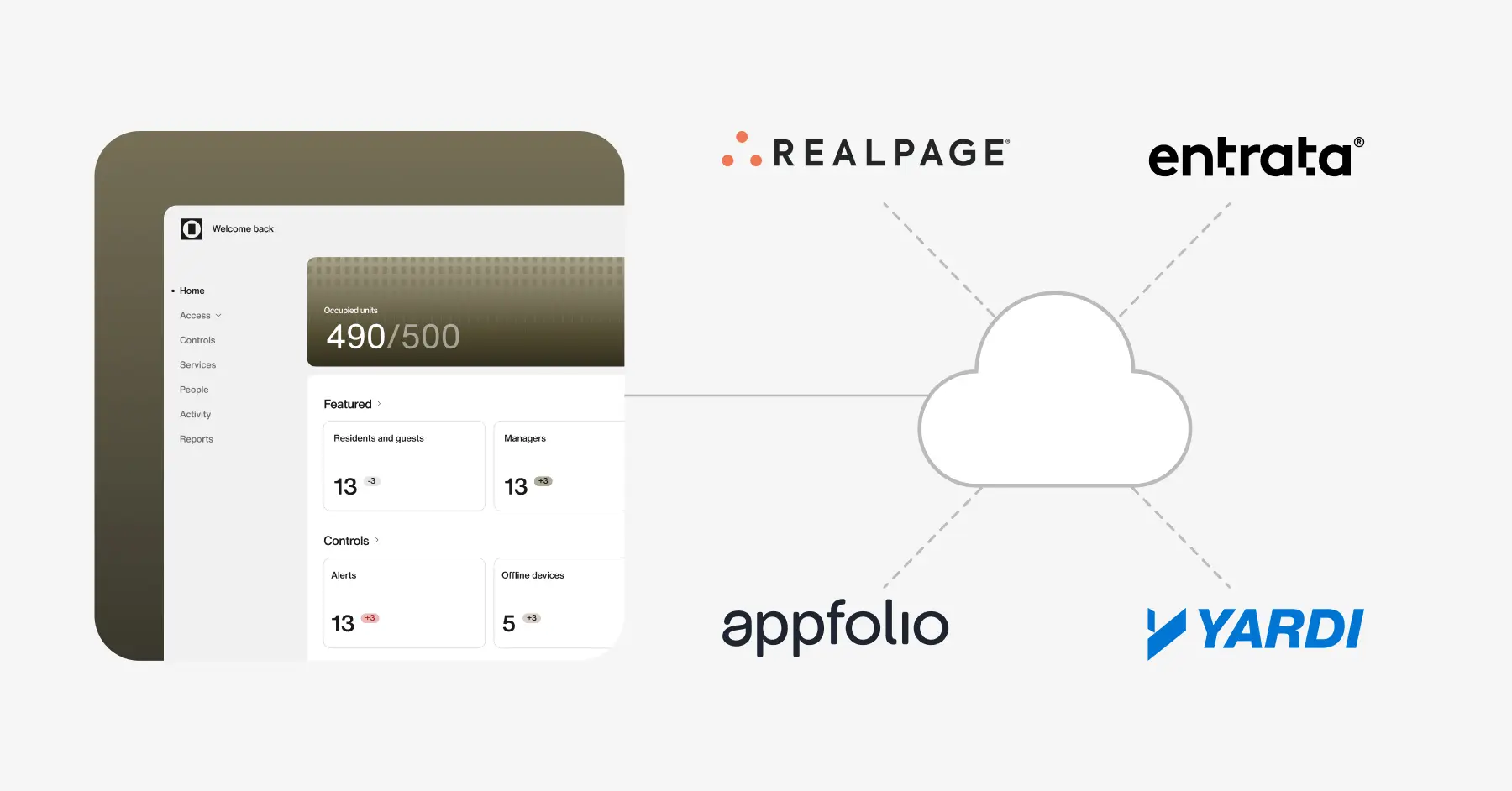
DOOR's PMS integration uses a one-way data connection. The property's existing PMS remains the source of truth, while resident profiles, lease dates, move-in and move-out information, and unit assignments sync into DOOR OS.
For property teams, the benefit is simple: keep managing residents in the system you already use and let the connected access platform work from that information.
How Does a PMS Integration Work With Smart Access Control?
The value of a PMS access control integration becomes clearest when you look at the resident lifecycle.
1. The property team updates the PMS
Leasing and property teams continue managing resident and lease information in their existing property management software.
A new resident becomes current. A lease ends. Someone renews. A resident transfers to another unit.
The team records the change in the PMS as it normally would.
2. Resident and lease information syncs to the access platform
Relevant resident, lease, and unit information then syncs frequently into the connected smart access platform.
With DOOR, the PMS remains the source of truth while DOOR OS reflects those resident lifecycle changes. Property teams do not have to recreate the same resident record simply to keep access information current.
3. Access can follow the lease lifecycle
With DOOR Automated Access enabled, lease status can support access changes automatically.
When a resident becomes current, access can be provisioned based on their unit assignment. When that resident becomes past, access can be revoked. If the resident changes units, access can be updated based on the new assignment.
The basic workflow looks like this:
PMS → Resident, lease, and unit data → DOOR OS → Resident access
Parks Associates specifically identifies PMS integration as part of modern multifamily infrastructure, noting that integrating access control with property management systems can reduce manual work and speed unit turns.
What Problems Does PMS Integration Solve for Multifamily Operators?
The value of property management software integration is not simply that two technologies can exchange data. It is the work property teams no longer have to repeat—and the number of manual handoffs they no longer have to keep aligned.
Less Duplicate Data Entry
Without an integration, the same resident change may need to be made in both the PMS and the access system.
Every additional touchpoint adds another opportunity for records to fall out of sync.
A multifamily PMS integration removes that duplicate step. Property teams manage the resident lifecycle in the PMS, while the connected access platform uses that information in the background.
Cleaner Move-Ins
Move-ins already involve plenty of coordination. Access does not need to add another separate process.
Once a resident's lease becomes active in the PMS, a connected access system can use that information to support the resident's access setup without requiring leasing staff to repeat the same data entry elsewhere.
For onsite teams, that means fewer steps to manage. Across a portfolio, it creates a more consistent move-in process from property to property.
More Consistent Move-Outs
Access should end when a resident's right to the property ends.
Without an integration, marking a resident as moved out in the PMS and removing their access can be two separate tasks. If the second step is delayed or missed, the access system can remain out of sync with the resident record.
With integrated smart access, lease status can support credential revocation automatically, helping keep access aligned with the PMS without relying on another manual handoff.
Easier Renewals and Unit Transfers
Resident records do not always follow a simple move-in, move-out cycle.
Residents renew leases or transfer from one unit to another. A connected system can keep unit assignments and access information aligned as those records change, reducing the number of updates property teams have to make across separate platforms.
More Consistent Operations Across a Portfolio
A handful of extra administrative steps at one property may not seem significant. Across hundreds or thousands of units, they add up quickly.
Technology fragmentation creates another challenge. Parks Associates found that 41% of multifamily companies report difficulty managing their smart building vendors, with that challenge increasing as the number of vendors across a portfolio grows.
Integration helps prevent smart access from becoming another disconnected workflow. Instead, it works from the resident and lease information teams are already maintaining.
.webp)
What Data Should a PMS Share With a Smart Access System?
Not all integrations work the same way. Operators should understand exactly what information moves between their PMS and their access platform—and what happens once it gets there.
For smart access, useful PMS data can include:
With DOOR PMS, resident names and contact information, lease dates, move-in and move-out dates, and unit assignments can sync from the PMS into DOOR OS.
It is equally important to understand what does not come from the PMS. Door Keys and doorcodes are managed within DOOR rather than passed from the property management system.
That is why operators should look beyond a vendor simply saying, "We integrate with your PMS." The more useful questions are: What information actually syncs, and what does that integration allow my team to stop doing manually?
Which Property Management Systems Integrate With DOOR?
DOOR integrates with leading multifamily property management systems, including:
- Yardi
- RealPage
- Entrata
- AppFolio
These integrations allow resident, lease, and unit information from the PMS to support access workflows inside DOOR OS.
For example, DOOR's Yardi access control integration allows leasing teams to continue managing the resident lifecycle in Yardi while connected resident information supports access through DOOR.
If you're comparing the major PMS platforms themselves, read our guide to Yardi, RealPage, Entrata, and AppFolio for multifamily.
What Should Operators Ask Before Connecting a PMS to Access Control?
"Does it integrate with our PMS?" is a useful starting point. It should not be the only question.
When evaluating a property management system integration, owners, operators, and technology teams should ask:
- Which system remains the source of truth?
Understand where resident and lease records should ultimately be managed. - Is the integration one-way or two-way?
Data direction affects where staff should make changes and how information remains aligned. - What information actually syncs?
Confirm which resident, lease, unit, and lifecycle fields are included rather than assuming everything in the PMS is available. - What triggers access changes?
Understand how move-ins, move-outs, renewals, and unit transfers affect resident access. - How are exceptions handled?
Property teams still need a clear way to manage situations that do not follow a standard resident lifecycle. - How frequently does information sync, and what control does staff retain?
Automation should reduce manual effort while still giving property teams the control they need.
These questions reveal much more about the operational value of an integration than an integrations logo on a vendor website.
PMS Integration Should Remove Work, Not Add Another System to Manage
Property teams already have a system where they manage residents and leases. A strong integration should make that system more useful, not give staff another place they have to remember to update.
With PMS integration, teams can continue managing the resident lifecycle in the software they already use while smart access responds in the background. Move-ins, move-outs, and unit changes no longer have to become separate access-management tasks.
Through DOOR OS, multifamily operators can connect Yardi, RealPage, Entrata, or AppFolio with smart access so resident access stays aligned with the data their teams already manage.
The goal is simple: fewer systems for staff to touch, fewer manual handoffs to manage, and access that stays aligned with the resident lifecycle.
Frequently Asked Questions
What is property management system integration?
Property management system integration connects a PMS with another software or technology platform so information can move between them without requiring duplicate data entry. In multifamily, integrations can connect resident, lease, and unit information with systems such as smart access control.
How does a PMS integrate with an access control system?
A PMS can send relevant resident, lease, and unit information to a connected access control platform. That information can then help keep resident access aligned with events such as move-ins, move-outs, renewals, and unit transfers.
Can a PMS automatically grant and revoke apartment access?
Yes, when the connected access platform supports lease-driven access automation. With DOOR Automated Access, resident access can be provisioned when a lease becomes current and revoked when the resident becomes past, while property teams retain control over access when needed.
Which property management systems integrate with DOOR?
DOOR supports integrations with leading multifamily PMS platforms including Yardi, RealPage, Entrata, and AppFolio. These integrations bring resident, lease, and unit information into DOOR OS to reduce duplicate entry and support resident access workflows.
Is DOOR's PMS integration one-way or two-way?
DOOR’s integration is a one-way integration from the property management system into DOOR OS. The PMS remains the source of truth for resident, lease, and unit information, while DOOR uses that data to support connected access workflows.



.webp)
.webp)
.webp)

