


Smart Building Technology Starts With the Right Network Foundation
Smart apartment and smart home systems rely on wireless networks that determine how devices communicate, how far signals travel, how long batteries last, and how much infrastructure a building needs to support a scalable IoT (Internet of Things) deployment. Owners, developers, and operators frequently hear terms like LoRa, Z-Wave, and Zigbee, yet most explanations focus on consumer smart homes rather than the operational realities of multifamily buildings.
The challenge is straightforward. Decision-makers do not need to become radio-frequency experts. They need enough clarity to select a network architecture that can reliably support hundreds of units and thousands of devices without inflating CapEx, slowing deployment timelines, or increasing operational burden.
This guide explains the wireless protocols that power modern smart apartments, how they behave inside real buildings, and why LoRa's balance of long-range and power efficient communications is an optimal solution for multifamily and student housing environments.
What Protocols and Power Really Mean in a Smart Building
A protocol is the set of rules that governs how devices exchange information. In smart buildings, protocols determine the frequency range signals use, how far those signals travel, how much power devices consume, whether devices communicate directly with gateways or hop through a mesh, how resilient the network is to resident behavior, and how much infrastructure is required throughout the property.
What “low-power” actually means
Low-power technologies such as LoRa and Z-Wave are designed to send small packets of data efficiently and infrequently. A leak sensor that reports status once per day, or only sends a message when water is detected, can operate for years on a single battery. At portfolio scale, this directly translates into fewer battery replacements, fewer unit entries, and less ongoing maintenance for on-site teams.

Z-Wave: Strong for Single Homes, Difficult to Scale in Multifamily
Z-Wave is a low-power protocol operating in the sub-GHz range and is commonly used for in-home devices like smart locks and switches. It relies on a mesh network, meaning devices pass messages through one another to reach a hub.
This approach works well when devices are close together and powered consistently. In multifamily buildings, it introduces several challenges.
First, range becomes a constraint. Signals weaken across long corridors, concrete cores, and multiple floors, especially when relay devices are sparse or intermittently powered. Second, device density is limited. While the mesh nature of Z-Wave can extend the range of the network, devices at further distances require multiple hubs, which results in increased latency and reduced battery life.
Third, setup and ongoing operations become more complex. Many Z-Wave devices must be individually paired, often using inclusion or exclusion procedures that can fail if devices are already paired, powered inconsistently, or installed out of sequence. As hub counts increase, so do installation time, configuration errors, and troubleshooting overhead.
Finally, mesh fragility increases operational risk. If a resident unplugs a device or a unit loses power, the mesh can break, causing nearby devices to lose connectivity. This leads to maintenance tickets, truck rolls, and resident disruption that compound across large portfolios.
Zigbee: Fast and Capable, but Challenged by Dense Wi-Fi Environments
Zigbee is another mesh-based protocol widely used in smart lighting, thermostats, and consumer IoT devices. It supports fast communication and moderate device capacity but operates primarily in the 2.4 GHz band, the same spectrum used by resident Wi-Fi, Bluetooth, and many consumer electronics.
In multifamily and student housing, this creates persistent interference. Every unit adds routers, access points, and personal devices that compete for the same spectrum. As a result, Zigbee networks often require extensive tuning, additional repeaters, or dedicated hubs on each floor to remain stable.
From a deployment standpoint, Zigbee pairing and network formation can also be sensitive to installation order and signal conditions. Failed joins and intermittent connectivity are common during large rollouts, increasing labor time and post-install support. While Zigbee can work well in controlled environments, it becomes operationally expensive and unpredictable in multi-unit buildings.
LoRa: Purpose-Built for Building-Scale IoT
LoRa is a long-range, low-power wireless technology designed specifically for large-scale IoT deployments. It uses chirp spread-spectrum modulation to send small amounts of data over long distances with strong penetration through walls, floors, and dense construction materials.
Unlike Z-Wave and Zigbee, LoRa networks do not rely on mesh communication. Devices communicate directly with gateways, eliminating relay dependencies and reducing network complexity. This architectural difference is critical in multifamily environments.
The Financial and Operational Reality: Why LoRa Scales
LoRa’s architectural differences translate directly into financial outcomes for the multifamily industry.
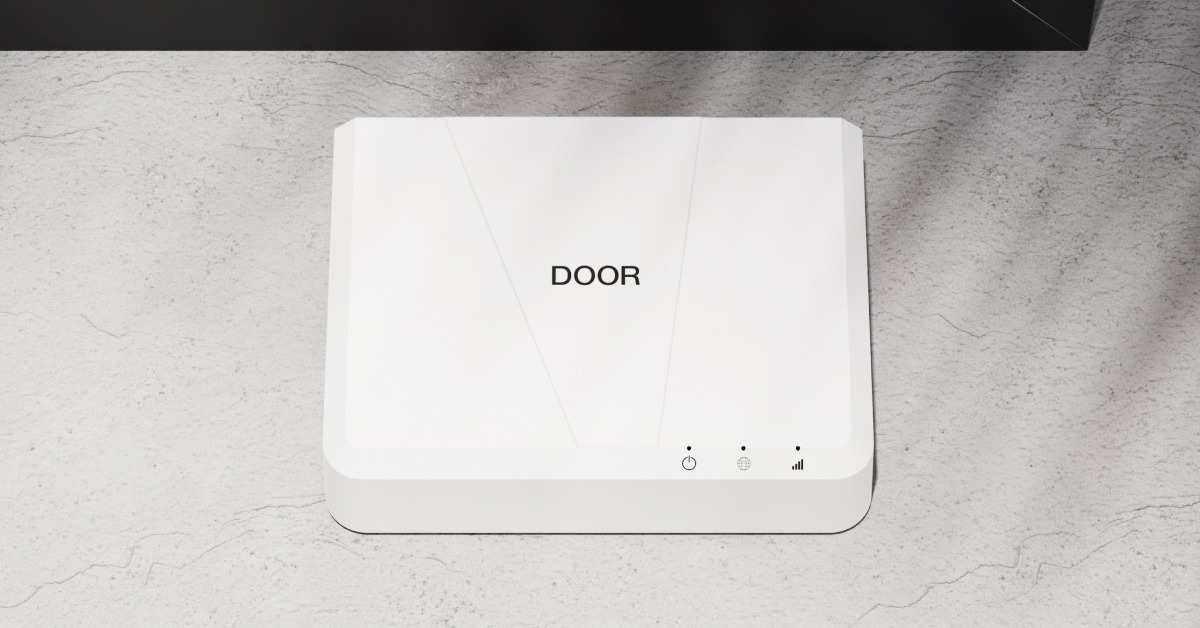
Because LoRa does not rely on mesh networking and supports far more devices per gateway, multifamily buildings require significantly fewer network access points than Z-Wave or Zigbee deployments. That reduction in infrastructure lowers hardware volume, minimizes power drops, reduces IT closet buildouts, limits cabling and conduit, and shortens installation timelines.
Deployment simplicity compounds those savings. LoRa devices do not require complex inclusion or pairing sequences tied to individual hubs. Devices can be provisioned centrally and activated predictably, reducing configuration errors and failed joins during large rollouts. Fewer gateways and no relay dependencies also mean fewer potential failure points across the property.
Over time, LoRa’s multi-year battery life and independence from resident Wi-Fi further reduce maintenance cycles and troubleshooting tickets. There are no mesh cascades when a unit loses power, and no interference issues when tenants upgrade routers.
For owners and operators, these architectural advantages translate into lower CapEx, lower OpEx, faster deployments, and more reliable building-wide systems.
Why LoRa Is the Best Fit for Multifamily and Student Housing
When evaluated in the context of real buildings, not single-family homes, LoRa offers a level of scalability and operational simplicity that Z-Wave and Zigbee cannot match. Its long-range performance, minimal infrastructure requirements, straightforward setup, and independence from resident Wi-Fi make it uniquely suited for multifamily and student housing portfolios.
Z-Wave and Zigbee continue to serve consumer automation use cases, but their mesh architectures, pairing complexity, and infrastructure demands introduce unnecessary cost and operational risk at building scale. For owners, developers, and operators focused on NOI, risk reduction, energy strategy, and long-term efficiency, LoRa is the protocol designed to support building-wide smart apartment deployments at scale.
.webp)



.webp)
.webp)
.webp)

