As buildings become more connected, more decisions are being made about software, automation, and integrations. But one of the most important choices still happens at the physical layer: how residents, staff, and vendors actually access the building.
Door hardware plays a direct role in that experience. It influences how access is managed, how systems integrate, and how easily operations can scale across a portfolio.
Among the different types of door hardware used in multifamily buildings, mortise locks are one of the most common in higher-density and professionally managed environments. As properties modernize, these locks are increasingly being paired with smart access technology, turning a traditional hardware choice into part of a broader operational system.
What Is a Smart Mortise Lock
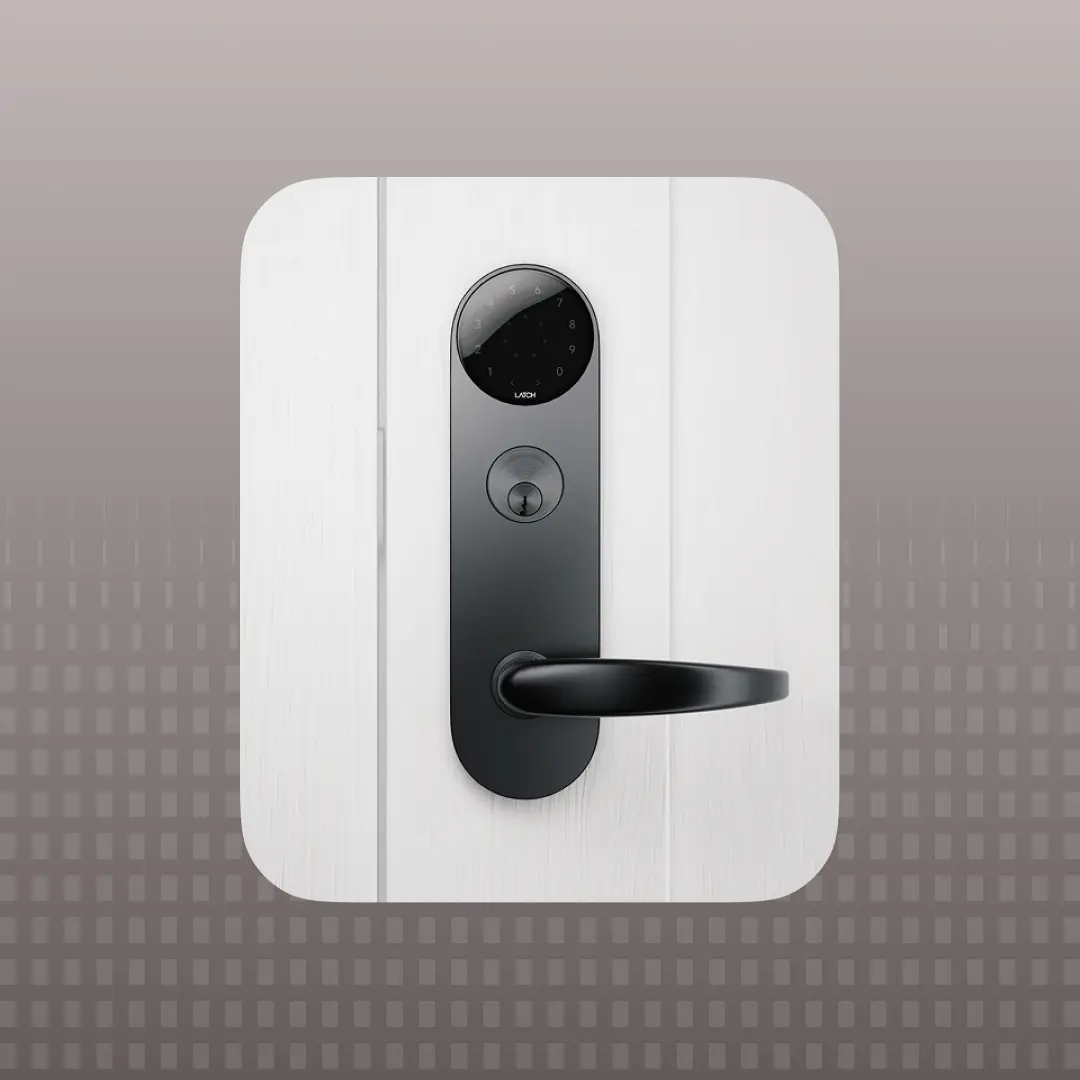
A smart mortise lock is a door lock that combines a traditional mortise lock body with electronic access control technology.
To understand how it works, it helps to compare it to another common lock type: the cylindrical lock.
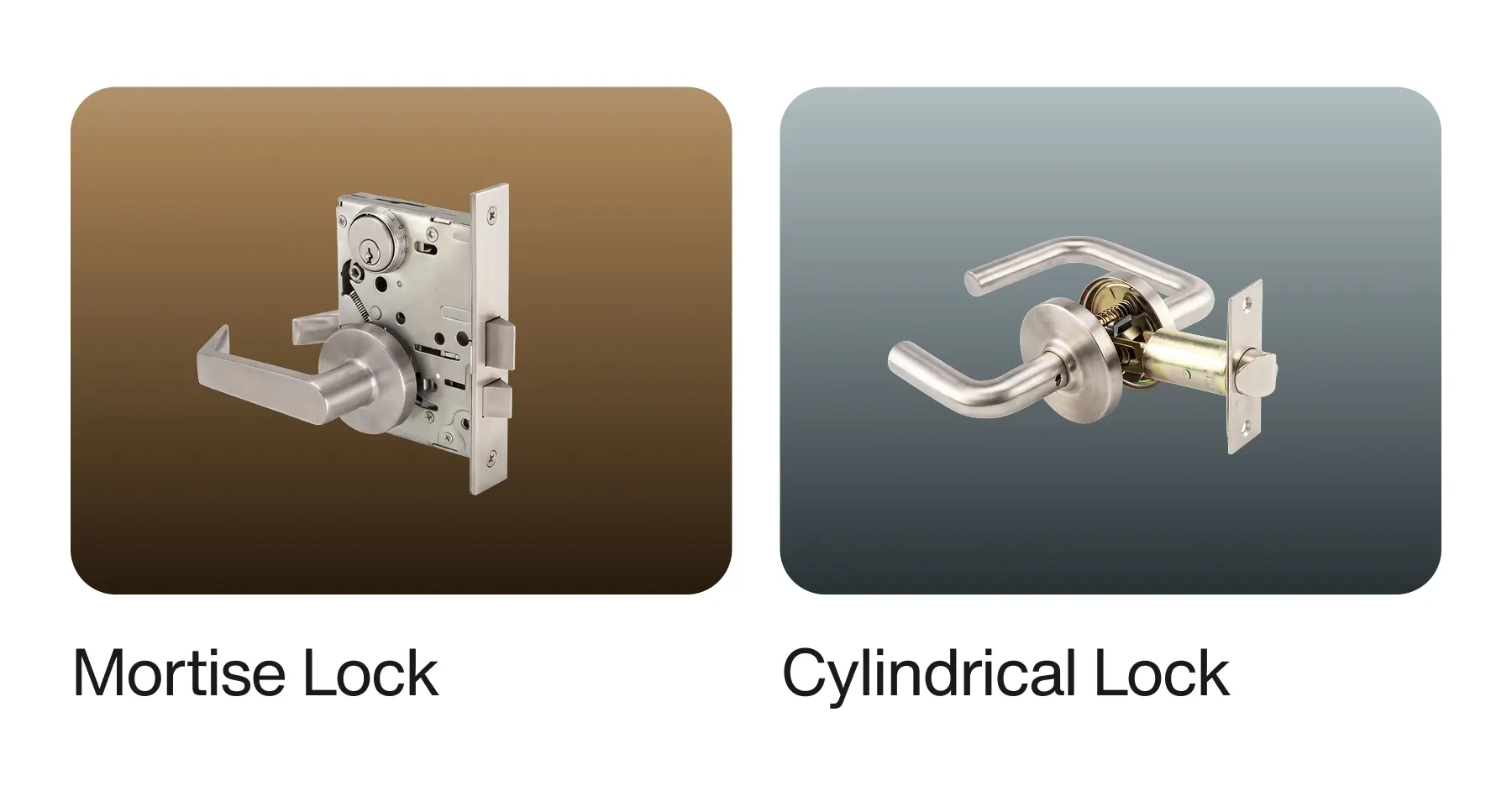
Cylindrical locks are installed through a bored hole in the door and are typically used in single-family homes or lighter-duty applications. The locking mechanism is more compact and self-contained, which makes installation simpler but limits durability and flexibility in higher-traffic environments.
Mortise locks are different. Instead of being installed through a simple borehole, they are built into a pocket cut into the door itself. This allows the lock body to house multiple components, including the latch, deadbolt, and cartridge, within a single, more robust structure.
A smart mortise lock builds on this design by adding a digital layer. It enables:
- Mobile credentials and keyless entry
- Remote access management
- Real-time audit trails
This transforms the lock from a purely mechanical device into part of a connected system that links physical access with digital control.
Understanding Mortise Lock Cartridge Types
One of the most important and often overlooked aspects of a mortise lock is the cartridge.
The cartridge is the internal locking mechanism inside the mortise lock body. It determines how the lock operates and, critically, what type of hardware is compatible with the door.
In multifamily environments, there is rarely a single standard. Properties often include a mix of cartridge types depending on when buildings were constructed, which vendors were used, and how specifications evolved over time.
Common cartridge types include:
- Marks
- Dorma / Corbin Russwin
- Sargent
- Schlage
- TownSteel
While these locks may appear similar from the outside, their internal configurations can differ significantly. That means compatibility is not guaranteed across systems.
Understanding which cartridge types exist within a property is a key step when evaluating smart mortise lock solutions.
Why Cartridge Flexibility Matters in Smart Lock Deployments
Upgrading to smart access is less about complexity and more about alignment.
The key question is whether the hardware being deployed is compatible with the doors already in place.
In many multifamily portfolios, door hardware varies across buildings or even within the same property. Without the right information about existing lock configurations, teams can run into challenges during deployment.
These challenges can include:
- Mismatched hardware that requires replacement
- Delays while identifying compatible solutions
- Additional coordination across vendors and installers
A smart mortise lock solution that supports multiple cartridge types allows operators to work with the infrastructure they already have. This reduces friction and helps avoid unnecessary door modifications, such as redrilling or replacing doors entirely.
Where Smart Mortise Locks Are Used
Smart mortise locks are commonly used in environments where durability, consistency, and control are important.
In multifamily housing, they are often installed on unit entry doors, where they must support frequent use and ongoing turnover. They are also widely used in student housing, hospitality, and other high-density residential settings.
These environments typically require door hardware that aligns with commercial-grade standards, including fire-rated assemblies and accessibility requirements such as single motion egress.
Because mortise locks are designed to meet these demands, they are often paired with smart access systems in buildings looking to modernize operations.

Smart Mortise Locks vs Traditional Mortise Locks
Traditional mortise locks are mechanical systems. Access is managed through physical keys, and changes require manual coordination.
Smart mortise locks extend that functionality into a digital system.
With a smart solution, property teams can:
- Issue and revoke access without physical handoffs
- Provide time-bound credentials for staff and vendors
- Monitor access activity through audit logs
This shift reduces reliance on manual processes and introduces greater visibility into how access is managed across a property.
Rather than replacing the underlying hardware category, smart mortise locks build on it, adding a layer of control that supports more efficient operations.
DOOR Smart Mortise Locks
In multifamily, hardware decisions are shaped by the reality of the building, not just the specification sheet. Door types, lock configurations, and cartridge standards can vary widely, especially across larger portfolios.
DOOR’s smart mortise lock lineup is designed to account for that variability, giving operators options that align with how their properties are actually built.
M2 Smart Mortise Lock
The M2 is best suited for new construction and environments where hardware can be standardized upfront. It uses a TownSteel mortise cartridge and supports both return and standard lever options.
By aligning lock specifications early in the development process, teams can deploy the M2 consistently across units without needing to accommodate multiple cartridge types or door variations.
M3 Smart Mortise Lock
The M3 is designed for flexibility because it supports a wide range of cartridge types, including:
- Marks
- Dorma / Corbin Russwin
- Sargent
- Schlage
- TownSteel
This compatibility allows the M3 to work across diverse door configurations without requiring doors to be redrilled, modified, or replaced.
It features a return-style quest lever and is built to support both new construction and retrofit environments, particularly where existing hardware varies across units or properties.
Why This Matters
For new developments, standardization can simplify deployment. For existing portfolios, flexibility is often more important.
By offering both approaches, DOOR enables operators to modernize access control without forcing changes to the physical infrastructure of the building.
FAQs
What is a smart mortise lock
A smart mortise lock combines a traditional mortise lock body with electronic access control, enabling keyless entry, remote management, and activity tracking.
What is the difference between mortise and cylindrical locks
Mortise locks are installed inside the door and include a larger internal mechanism, while cylindrical locks are installed through a bored hole and are typically used in lighter-duty applications.
What are mortise lock cartridge types
Cartridge types refer to the internal locking mechanisms used within mortise locks. Different manufacturers use different designs, which affect compatibility with doors and smart lock systems.
Are smart mortise locks better than traditional locks
Smart mortise locks can improve efficiency by reducing manual processes, enabling remote access management, and providing greater visibility into building access.
Conclusion
There is no single standard for door hardware across multifamily buildings. Properties are shaped by different construction timelines, specifications, and operational needs.
Upgrading access is not just about selecting a smart lock. It is about choosing a solution that aligns with the doors already in place.
Smart mortise locks allow operators to modernize access while working within existing infrastructure. With the right approach, this can be done without reworking doors or introducing unnecessary complexity.
As buildings continue to evolve, access control becomes more than a point solution. It becomes part of how properties operate every day, connecting physical spaces with the systems that manage them.
.webp)


%201.webp)


%201.webp)